
Maria Carranza
Fairbanks School of Public Health
S315 Community Organizing for Health Promotion
Indy Hygiene Hub: A Health Topic Needing Addressed in Indiana
PBHL-S315, Community Organizing for Health Promotion, has been selected as a course with engaged learning experiences to reflect back on. I took this class in the Fall of 2024 with Carolyn Runge. In this assignment I wanted to look at hygiene poverty, I wanted to understand how it affects public health and what we can do to fix it. I looked at the grassroot organization Indy Hygiene Hub. They are an organization located on the north side of the city and help address and provide access to essential hygiene care to the community.
In Indiana, hygiene poverty is a silent driver of health disparities, disproportionately affecting low-income families, unhoused individuals, rural communities, and marginalized groups. One-third of families that are unable to afford household goods report bathing without soap or reusing diapers to get by (Feeding America, 2023). These conditions increase risk for infection, mental health challenges, and social exclusion, especially among those already facing systemic barriers. The COVID-19 pandemic opened a window of opportunity to reframe hygiene as a public health priority. Moving forward, policy solutions could include tax exemptions for hygiene products, corporate partnerships for school-based distribution, and infrastructure for public sanitation access. Addressing hygiene poverty is not just about supplies—it’s about equity, dignity, and health justice.


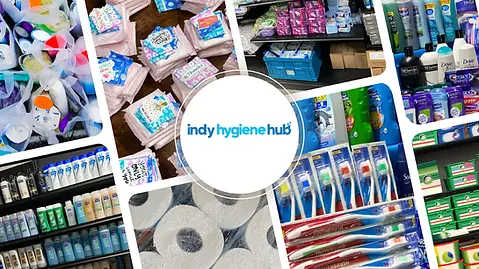
Organization: The Indy Hygiene Hub
The Indy Hygiene Hub is working to restore dignity and provide essential hygiene items to families in need in Central Indiana. In general, Indy Hygiene Hub focuses their efforts Their deepest focus is ensuring families in Central Indiana have consistent, free access to hygiene essentials—items that are often excluded from assistance programs like SNAP. This includes not just soap and toothpaste, but also period products, diapers, and cleaning supplies. What sets them apart is their commitment to consistency and community. The monthly drive-thru pantry isn’t just a distribution point—It’s a steady gesture of respect and dignity. . They also extend their reach through partnerships with schools and nonprofits, offering period packs and hygiene kits where they’re most needed.
Final Presentation: The Hygiene Poverty Crisis
Final Paper: The Hygiene Poverty Crisis
America's Unspoken Hygiene Crisis talks about several programs designed to assist families with healthcare, food, and housing, but there isn't a program to help provide families with hygiene products. Programs such as SNAP and WIC, which are commonly used by low-income earners, don't cover hygiene products.
Application is no longer available.
What I learned
When I first started this project, I never thought about how some people don't have access to basic hygiene needs. After I started to research this, I realized how hidden of a crisis it was. This is one of those issues that no one thinks about because everyone should have the ability to afford and access basic hygiene products. It was really eye opening to me that one of the biggest issue contributing to this is that there are no programs to help people. Everyone needs to have food, water, shelter, clean air, clothes, and sleep, which are areas that we have federal programs for, but nothing that covers hygiene products. Programs like WIC and SNAP which are most commonly used by low-income earners don't cover basic hygiene products, which was absurd to hear.